
John Locke: Nature vs Nurture


Although some of John Locke’s theories have since been challenged by modern science, his emphasis on environmental influence and his concept of the tabula rasa (part of the nature vs nurture debate) marked a significant shift in the study of human development and helped shape modern approaches to education and psychology.
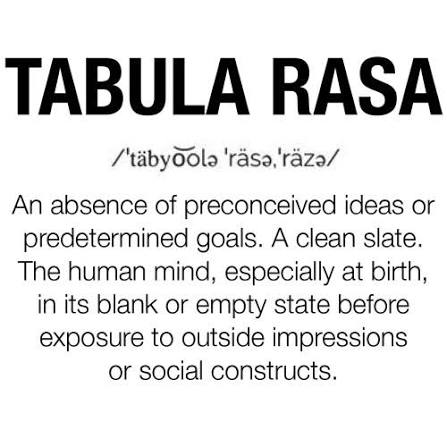
Locke argued that the human mind begins as a blank slate at birth, meaning that knowledge and character are largely developed through experience and environment rather than innate ideas. He strongly favored the influence of nurture, believing that a child’s surroundings and upbringing “write” upon this blank slate. Because he believed that the environment plays such an important role in shaping the individual, Locke emphasized the importance of proper early education and training in developing a child’s character.
However, while Locke’s emphasis on environmental influence was revolutionary, modern biology has demonstrated that development is considerably more complex than a simple choice between nature and nurture. Epigenetics demonstrates that environmental factors can influence how genes are expressed, meaning that nurture does not simply write information onto an otherwise blank slate. Instead, experiences and environmental conditions can affect the expression of certain genes, demonstrating that biological and environmental influences interact throughout development.
Before Locke, many influential ideas about human nature emphasized characteristics that were believed to be innate or predetermined. For example, King James I defended the divine right of kings, the belief that a king’s authority to rule came from God rather than from human experience or education. While this belief concerned political authority rather than child development specifically, it reflects a broader worldview in which certain qualities, knowledge, or social positions could be understood as inherent or divinely predetermined rather than shaped by experience.

Locke’s theory of the tabula rasa challenged this way of thinking by proposing that individuals are not born with predetermined knowledge or character, but develop through experience and education. His 1690 concept therefore represented more than a theory about how children learn; it contributed to a fundamental shift in how people understood human development. By placing greater emphasis on sensory experience, observation, education, and environment, Locke helped establish the intellectual tradition from which later theories of learning and development emerged. His ideas encouraged scholars to consider childhood as a period in which experiences can actively shape the developing individual rather than simply reveal characteristics that were already predetermined at birth. Although modern developmental science has moved far beyond Locke’s original theory, the questions he raised continue to influence how we understand the developing child.
Many of Locke’s ideas are now outdated, yet his influence on the study of the human mind and child development remains significant. His theories provided later scholars with ideas to challenge, refine, and build upon, demonstrating that a theory does not need to be completely correct to fundamentally change a field of study.



I like your blog. I think it's cool how we all think differently.
You talked about John Locke and i talked about Erik Erikson. They are similar because they both think nurture is more important than nature. The difference Erikson says you can not going to be heathy if you don't go through the stages well and Locke just talks about nurture. Yours is more important.