
The Call to the Wild, II: Competence & Positive Influence


In The Call of the Wild, written by Jack London in 1903, Buck must learn to survive in a world governed by different rules than those of the comfortable life he once knew. The people he encounters shape his development through both cruelty and kindness. Through Buck’s journey and his relationship with John Thornton, London suggests that becoming a positive influence requires more than good intentions; it requires the wisdom and competence gained through experience.
Carl Jung’s archetypes provide a useful way to understand the different stages of Buck’s development. In “On the Psychology of the Trickster-Figure,” Jung describes the trickster as a contradictory figure who can be foolish and destructive but also has the potential to develop into something greater. Jung even describes the trickster as a “forerunner of the savior” (263). This idea applies to Buck’s journey as he abandons his former assumptions and develops the ability to survive in a world governed by unfamiliar rules.
The humans Buck encounters demonstrate how different people can shape another person’s development. The man who kidnaps Buck and the handlers who teach him the law of club and fang force him to confront a reality he does not understand. Later, Hal, Charles, and Mercedes demonstrate the dangers of incompetence when they undertake a journey they are unprepared to manage. Buck gradually learns that survival requires more than following the rules he once knew. He must recognize when those rules no longer apply and adapt to his circumstances. His defeat of Spitz demonstrates this change: Buck no longer behaves like the inexperienced dog he was when he first arrived in the North.
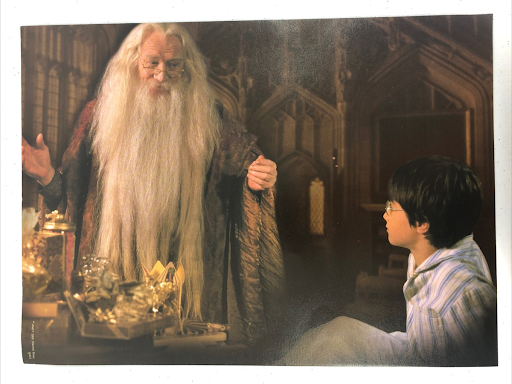
Harry Potter follows a similar pattern of development. At the beginning of the series, Harry enters a world he does not understand and must learn to navigate its rules, dangers, and expectations. Like Buck, he begins with limited experience and learns through his own choices and the actions of those around him. In Harry Potter and the Sorcerer's Stone, Dumbledore warns Harry that the Mirror of Erised provides neither knowledge nor truth, teaching him that becoming consumed by his desires can prevent him from fully engaging with life (Rowling, Sorcerer's Stone 213). As Harry grows, he learns that navigating the world requires more than understanding its rules; it also requires judgment about how to respond to its dangers. Both Harry and Buck become more capable as they learn to adapt to circumstances rather than rely on the assumptions they once held.
Dumbledore, like John Thornton, serves as a positive influence because he uses his experience to help someone less experienced develop. Both men guide those in their care while allowing them to learn and make choices of their own. In Harry Potter and the Deathly Hallows, Dumbledore helps Harry understand the circumstances surrounding his apparent death, but Harry must ultimately decide whether to return to the living world (Rowling, Deathly Hallows 722). This moment demonstrates that Dumbledore’s role is not simply to rescue Harry, but to guide him toward making his own decisions. In Jungian terms, both Dumbledore and Thornton can be interpreted as savior figures because they use their knowledge and abilities to help others develop rather than merely control them. Yet neither Harry nor Buck can remain dependent on a protector forever. Both eventually lose someone who helped guide them, forcing them to rely on the knowledge and strength they have developed themselves. Their journeys suggest that a true savior does more than rescue others; a true savior helps others become capable of standing on their own.
John Thornton represents a positive influence because he combines strength with compassion. Unlike the people who treat Buck as a tool, Thornton values Buck’s life and develops a relationship with him based on loyalty and trust. He does not simply protect Buck; he gives him the security to develop his abilities and become more fully himself. Thornton is therefore more than a good man. He is a role model because he uses his strength to protect others rather than control them. Buck develops a similar capacity for loyalty and sacrifice, even as he becomes wilder and leaves more of his former life behind.

Ultimately, Buck’s journey suggests that becoming a savior requires learning from experience and developing the competence to act on that knowledge. Good intentions alone cannot protect others, just as strength without compassion can become cruelty. Thornton demonstrates how strength can help another being grow, while Buck’s development shows how hardship can teach someone to protect others in turn. A positive influence is not simply someone who is good, but someone who has learned to turn goodness into meaningful action.
Works Cited
Jung, C. G. “On the Psychology of the Trickster-Figure.” The Archetypes and the Collective Unconscious, translated by R. F. C. Hull, 2nd ed., Princeton University Press, 1968, pp. 255–272.
Rowling, J. K. Harry Potter and the Sorcerer's Stone. Arthur A. Levine Books, 1998.
Rowling, J. K. Harry Potter and the Deathly Hallows. Arthur A. Levine Books, 2007.


Comments